
Meet Sharon Kung
Originally published on CanvasRebel.
Due to access limitations on their platform, this interview is shared here for accessibility.
April 2, 2026
Canvas Rebel Interview
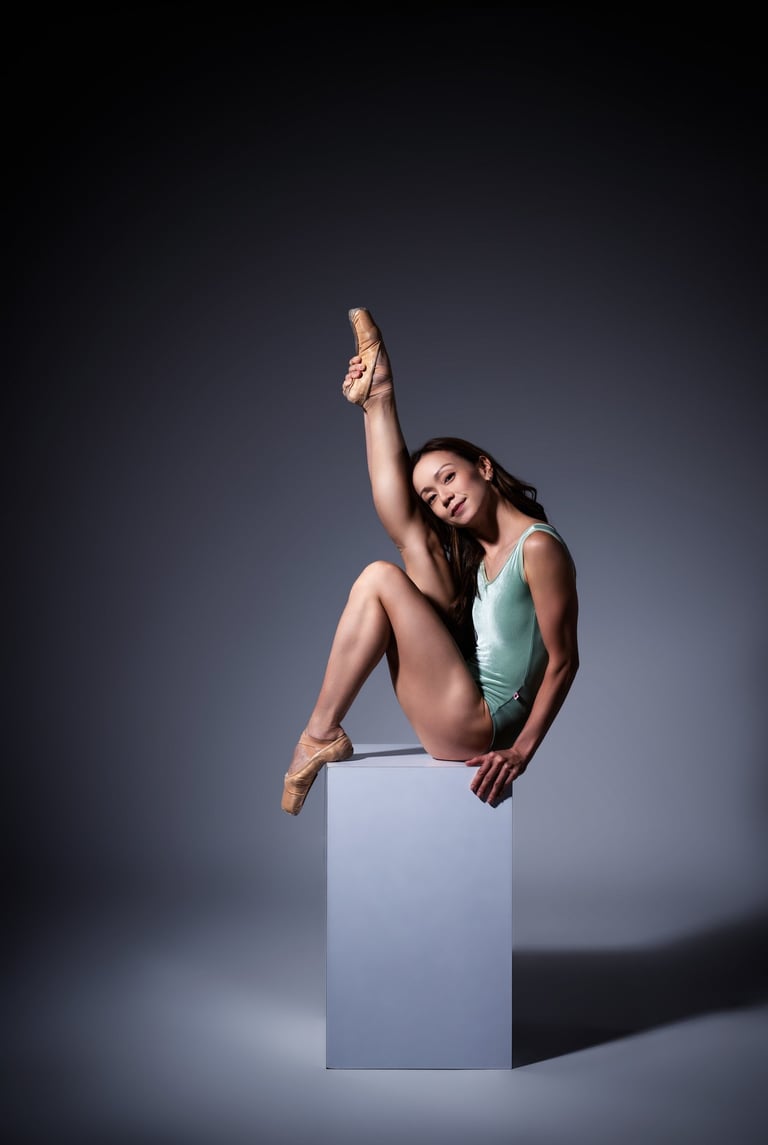
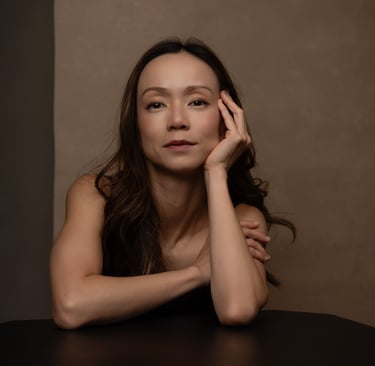
Merv Kwok | Six Senses Photography
We recently connected with Sharon Kung and have shared our conversation below.
Hi Sharon, thanks for joining us today. Are you happier as a creative? Do you sometimes think about what it would be like to just have a regular job? Can you talk to us about how you think through these emotions?
I am happier as a creative because it is the manifestation, insight, and embodiment of being an artist. I view the world through dance. Everything I experience is filtered through my training as an artist. Movement, space, timing, relationships. Dance shaped how I observe people, how I process what is happening around me, and how I make decisions.
At the same time, I think about having a regular job all the time. Especially now that remote work is the norm for most industries. Except for the performing arts. Our work still requires physical presence. We have to be in the studio, in rehearsal, in our bodies, and in the room with other people. That is the magic of the craft. It builds community, reminds us of our shared humanity, and shows that art is one of the deepest ways we connect and practice empathy in society.
The moment I remember most clearly was in 2012. I had just left Chicago after dancing professionally for three years with a company and was planning to try my luck in Europe during the upcoming audition season. Around the same time, I was offered a position in the corporate office of a Fortune 500 retail company. Two very different paths.
I graduated from the University of California, Irvine with a BFA in Dance Performance and a BA in Economics in 2008, the year of the economic crisis. In many ways, life had already nudged me toward pursuing the arts.
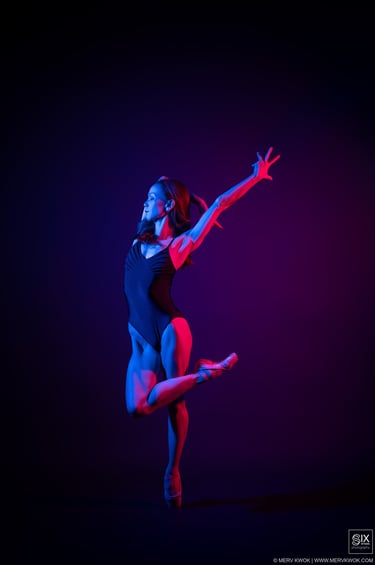
Of course, I still wonder sometimes how life might have unfolded if I had taken the corporate position. Growing up Asian American, financial stability and reaching certain milestones are often seen as markers of success and maturity. A career in the arts operates on a very different value system. It is not driven by status, external validation, or conventional ideas of success, but by discipline, purpose, and a deep commitment to the work itself.
Fourteen years later, I have no regrets about choosing the creative path. In many ways, it feels like a gift to have followed through and experienced the full arc of a professional dance career, from training to becoming a professional and continuing beyond the stage. Many people spend years developing their craft only to leave it behind because of the extreme demands and perfectionist standards that come with the profession.
Especially now, with the rise of automation, I am grateful to have chosen a path rooted in human presence. Dance requires you to be fully engaged with the work, with others, and with the world. It also allows me to imagine and experience the world through a different medium, one that is not defined or limited by automation or capitalism. It creates space to explore possibilities beyond those systems, grounded instead in human connection, expression, and meaning. That is something that cannot be automated or replaced.
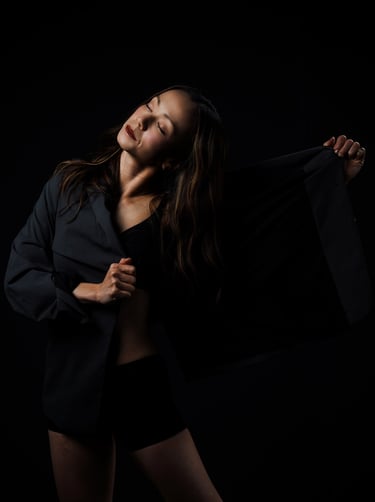

Merv Kwok | Six Senses Photography
Duy Ho Photography | Urban Beauty Loft
As always, we appreciate you sharing your insights and we’ve got a few more questions for you, but before we get to all of that can you take a minute to introduce yourself and give our readers some of your back background and context?
I am a professional dancer, choreographer, and creative entrepreneur. I have been dancing for over 30 years, including 18 years as a professional dancer. My background is in classical ballet, contemporary, and modern dance, and the performing arts have been the foundation of my career. I am also the owner and founder of Ballet Trauma Club, a lifestyle ballet apparel brand.
Over the years I have danced professionally, choreographed, taught, and held leadership roles within dance companies, including serving as a rehearsal director. Those experiences gave me insight into how artistic organizations function both on stage and behind the scenes, and how dancers navigate the realities of building a life in the arts.
I trained in classical ballet and later graduated from the University of California, Irvine with a BFA in Dance Performance and a BA in Economics. That combination shapes how I approach my work today. I think like an artist, but I also understand systems, sustainability, and the structural challenges within the performing arts.
Alongside my performing career, I have always been curious about entrepreneurship and building something of my own. That curiosity led me to create Ballet Trauma Club, a creative project and apparel brand that speaks directly to dancers and the broader dance community. It is not a dance company, but a platform that allows me to combine my experience in the performing arts with my background in economics while exploring cultural commentary, humor, and some of the harder conversations within the dance industry.




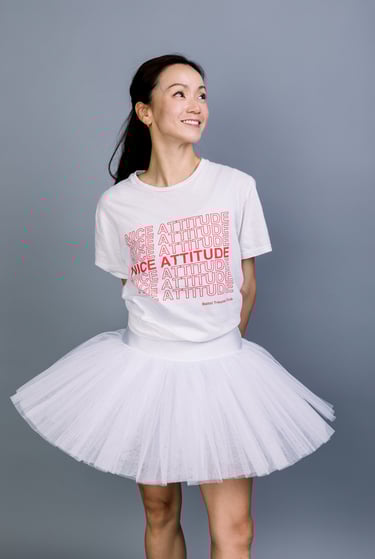
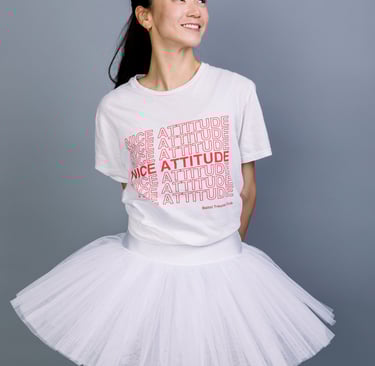
Left to right: Nicole Blumberg Photography, Duy Ho Photography (both) | Courtesy of Ballet Trauma Club
Ballet is often presented as polished and perfect from the outside, but the lived experience of dancers is far more complex. Anyone who has trained seriously understands that building a career in dance is not just about talent or skill. It also requires discipline, persistence, resilience, timing, and luck. Ballet Trauma Club acknowledges those realities with humor and honesty, creating something dancers immediately recognize as part of their shared experience and community. At a time when much of the world can feel increasingly isolated, that sense of recognition and connection becomes even more meaningful. At the end of the day, being seen and heard is also an art form.
What sets my work apart is that it comes from lived experience inside the industry. Having spent decades in studios, on stage, and different countries, I understand both the beauty and the demand of the training. That perspective shapes how I create, whether I am performing, choreographing, teaching, or building projects like Ballet Trauma Club.
The performing arts are deeply rooted in history, but the world around them is changing quickly. I am interested in exploring how new ideas around funding, technology, and shifting audience behavior can help move the field forward while still honoring the art form.
Ultimately, my work sits at the intersection of art, culture, and community. I want my work to reflect the realities of the dance world while helping push the industry toward new ways of thinking about its future.
We often hear about learning lessons – but just as important is unlearning lessons. Have you ever had to unlearn a lesson?
One lesson I had to unlearn was the binary thinking that often exists in classical ballet training.
From a young age, dancers are taught to measure themselves against rigid ideals. The perfect feet. The perfect turnout. The perfect body type. Early in my training, I remember being told that I was unfit to be a dancer because I had “flat feet,” was bow-legged, and did not have the proper proportions. I was nine years old and it happened during my first pointe shoe fitting. Hearing something like that at such a young age can be fairly traumatic, especially during what is supposed to feel like a milestone in a dancer’s training.
Comments like that can plant a seed that certain bodies simply do not belong in the art form and can cause real psychological harm in young minds that are still developing their sense of identity and confidence.
What I had to unlearn was the shame attached to that mindset. Over time I realized that dance education is never a one-size-fits-all model. I also grew up in an environment where dance was often taught from a book rather than from a body that had embodied the training and professional experience itself. Teaching from lived experience brings a much deeper understanding of anatomy, mechanics, and how dancers develop over time.
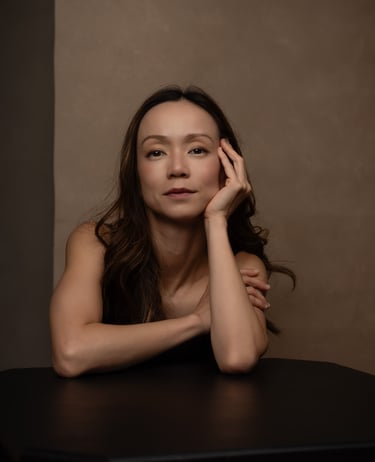
At the same time, I have been fortunate to study and work with incredible educators from both the dance and somatic fields. Those teachers helped me see the body not as something to force into rigid ideals, but as something to understand, refine, and develop with care and intelligence.
Instead of measuring myself against fixed standards, I began approaching my body with curiosity. As much as dancers train the mind through discipline and focus, the body itself becomes the instrument of the craft.
Over time I realized that the instrument itself changes. The body evolves with age, and working with it through each decade brings new challenges and discoveries. The learning curve can be frustrating, but it is also exhilarating to experience how new dimensions of movement and understanding continue to unfold.
Technique provides the foundation, but it does not create an artist on its own. Technique is the tool, but artistry is what gives the work meaning. It is through interpretation, musicality, emotional intelligence, and lived experience that movement communicates something deeply human. That spark of individuality is what distinguishes one artist from another.
Letting go of that early binary thinking changed how I approached dance. One thing a long career in the field teaches you is that the only constant is change. We are constantly recalibrating within our bodies and within the communities we move through.
It also changed how I understand the profession itself. Building a career in dance is not simply a matter of the perfect body type, talent, and hard work. Timing, opportunity, networks, and sometimes luck all play a role. Recognizing that reality gave me a stronger sense of ownership over my path as an artist and continues to shape the conversations I hope to encourage through projects like Ballet Trauma Club.
Kavan Lake Photography
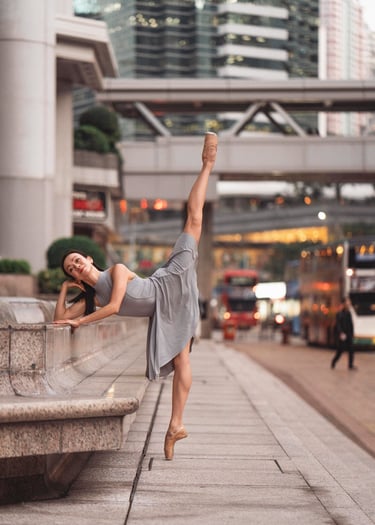
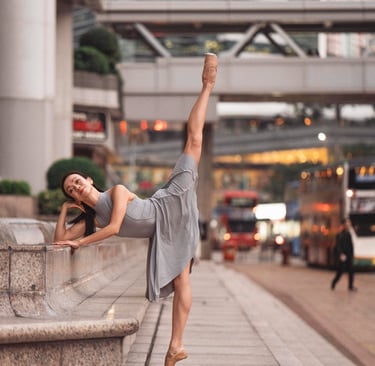
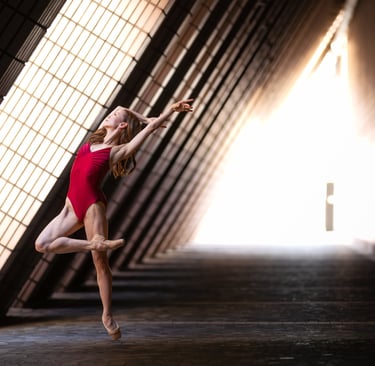
Wilfred Yuen Photography
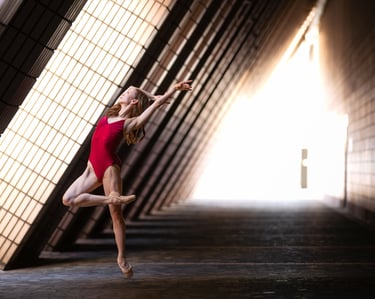
Paul Cameron | Dance Imagery Scotland
Is there something you think non-creatives will struggle to understand about your journey as a creative? Maybe you can provide some insight – you never know who might benefit from the enlightenment.
A common misconception about creative careers is that they lack the intellectual rigor, technical precision, and discipline associated with fields like finance, law, or medicine. This often extends to the belief that artists and creators should be willing to work for little to no compensation in exchange for “exposure,” or that art forms like ballet are simply trends rather than disciplines built on generations of training and tradition. In reality, artistic careers are built on decades of disciplined training, complex skill development, and a deep commitment to understanding the world through one’s craft.
In dance, training often begins very young. Many professional dancers spend well over a decade refining their craft before audiences ever see the final result on stage. What appears effortless is supported by thousands of hours of repetition, discipline, and physical and mental conditioning. As Martha Graham famously said, “It takes ten years, usually, to make a dancer. It takes ten years of handling the instrument, handling the material with which you are dealing, for you to know it completely.”
For many of us, the decision to pursue this path does not begin in college. Most of us recognize the calling much earlier. At least it was that way for me. Long before it becomes a profession, it is already a way of understanding and experiencing the world.
That path also comes with sacrifices that are not always visible from the outside. Many dancers spend their formative years in studios while others are experiencing social milestones or more conventional paths.
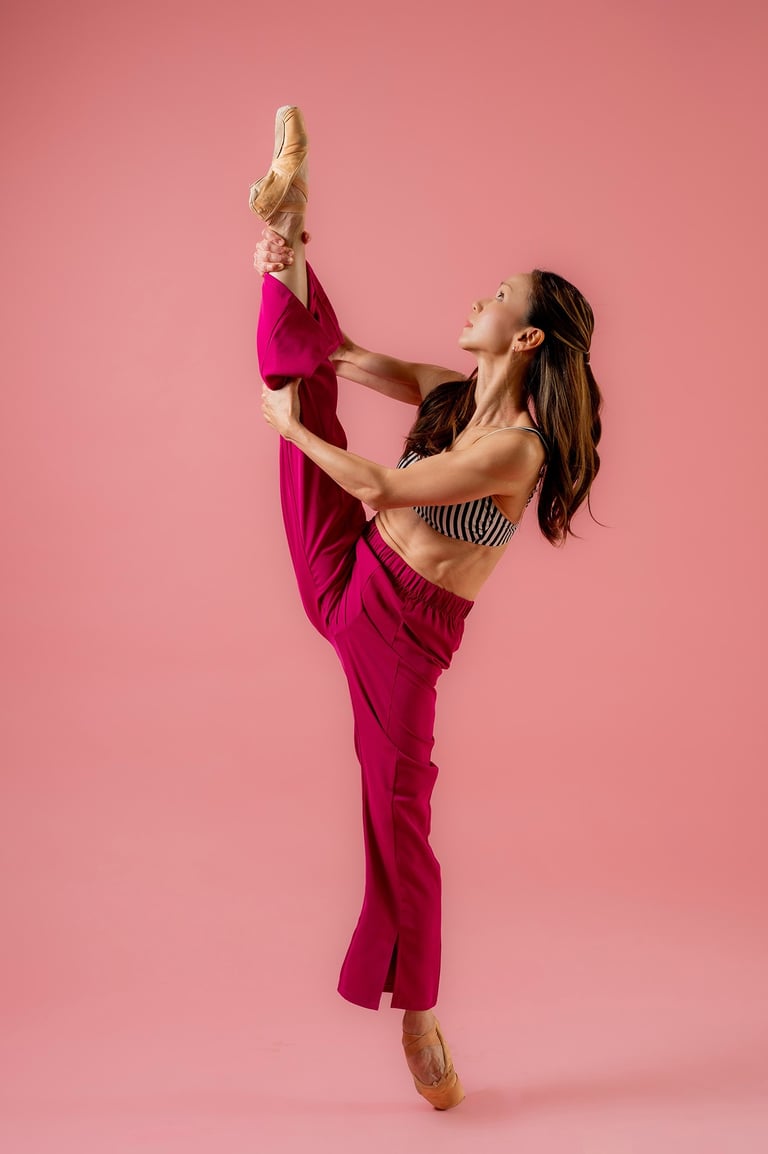
Duy Ho Photography | Urban Loft Beauty
There is also a misconception that creative careers are driven purely by passion. Passion may bring someone to the work, but sustaining a life in the arts requires integrity, resilience, and adaptability. Artistic training teaches us that progress does not happen overnight. There are no shortcuts or instant gratification in a professional dance career. You have to stay committed even when it feels like pure failure. Because our careers are both our passion and our profession, artists must develop the emotional capacity to separate rejection from identity and continue moving forward.
The skills developed through artistic training are far more nuanced than people often realize. Dancers constantly calibrate complex information in our bodies and minds while maintaining spatial awareness, performing with precision, collaborating with others, and stepping into roles with little notice.
This training also develops strong decision-making, observational awareness, spatial thinking, creativity, and empathy. These are highly transferable skills that extend far beyond the performing arts and into many other industries and leadership roles.
For me, that curiosity about how the field operates led me to create Ballet Trauma Club, which explores both the humor and realities of a profession built on precision, consistency, persistence, resilience, timing, and sometimes luck.
At the end of the day, artists are not simply creating performances. We translate human experience into movement and story so that others can see themselves and the world with greater clarity, empathy, and understanding. That work is built not only on decades of time and training, but also on decades of financial investment, a reality that is often overlooked when the value of creative work is reduced to “exposure.”


Kavan Lake Photography
Contact Info:
Other: Ballet Trauma Club:
Website: http://www.ballettraumaclub.com
IG: @ballettraumaclub
FB: facebook.com/BalletTraumaClubPersonal:
Website: http://www.sharonkung.com
IG: @its.sharonkung